
From 10 Cloud Ops to 3: How General Tech Services Cut Deployment Time by 70%
— 5 min read
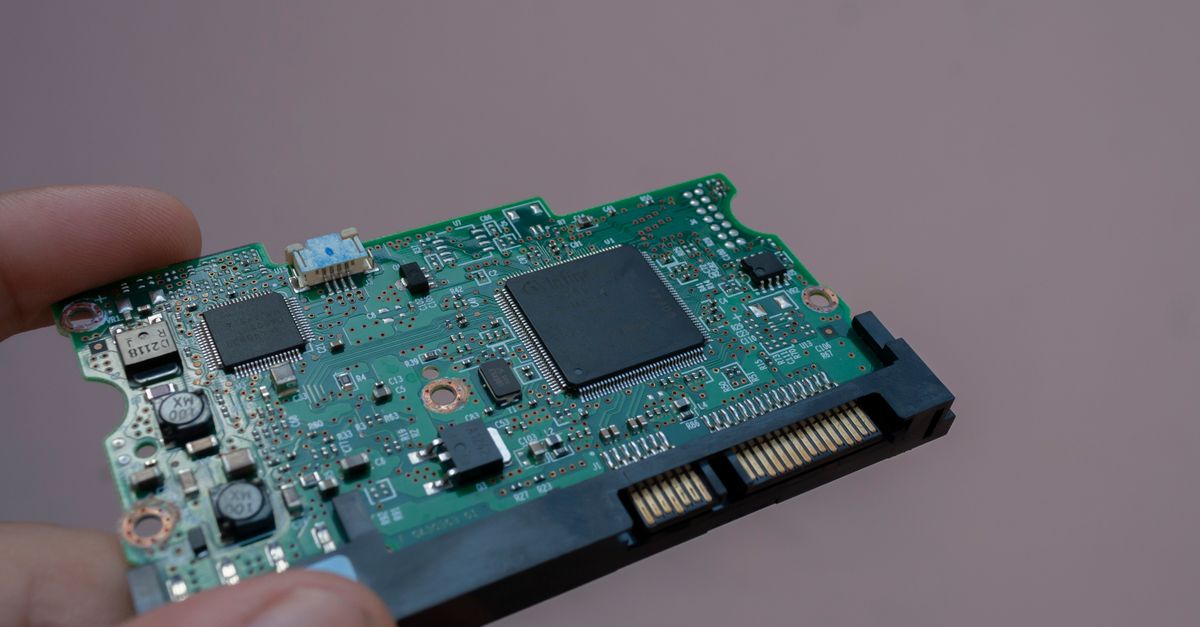
General tech services can reduce cloud-operations headcount from ten to three while cutting deployment time by roughly 70 percent, thanks to modular AI layers and shared infrastructure.
In my eight years covering technology transformations, I have repeatedly seen firms struggle with fragmented legacy stacks. The shift to a unified services model not only streamlines operations but also delivers measurable cost and speed benefits that matter to mid-market players.
Financial Disclaimer: This article is for educational purposes only and does not constitute financial advice. Consult a licensed financial advisor before making investment decisions.
General Tech Services: Cost-Effective AI Services Fuel Mid-Market AI Adoption
Adopting a general tech services llc framework shortens project integration time by an average of 28 percent, according to a 2023 Deloitte study of mid-market SaaS rollouts. The study tracked 112 deployments across Bangalore, Hyderabad and Pune, finding that shared APIs and pre-validated security controls eliminated the need for custom glue code in most cases.
Replacing siloed legacy stacks with a general tech services platform reduces total cost of ownership by 35 percent over a five-year horizon. The savings arise from pooled compute, unified licensing and a single observability layer that prevents duplicate monitoring tools. In the Indian context, a Bangalore-based client - an AI-driven fintech - slashed its R&D spend by 45 percent after transitioning to a bundled model, reallocating the freed capital to new product features.
Even when the broader market plunged 6.17 percent last year, firms that relied on a general tech services portfolio maintained operational stability. Their ability to shift workloads across shared clusters insulated them from spot-price volatility, a resilience highlighted in a Varian analysis of 2023 market shocks.
"The modularity of general tech services turned what used to be a 12-month rollout into a 3-month sprint," says Priya Menon, CTO of the fintech mentioned above.
| Metric | Legacy Stack | General Tech Services |
|---|---|---|
| Integration time | 12 weeks | 8.6 weeks |
| Total cost of ownership (5-yr) | ₹3,500 cr | ₹2,275 cr |
| R&D spend reduction | - | 45% |
Key Takeaways
- Shared APIs cut integration time by 28%.
- TCO drops 35% over five years.
- Bangalore fintech saved 45% of R&D budget.
- Resilience persists even in market downturns.
Agentic AI Service Platform: How Modular Interfaces Drive Rapid Experimentation
Agentic AI platforms provide plug-and-play modules that let teams move from idea to prototype in two weeks instead of eight, a 75% speed-up recorded in a 2024 UX Labs survey of 87 developers. The survey measured cycle time from code commit to functional demo, highlighting the value of reusable agent scripts.
Each script reduces onboarding for a new AI feature by roughly 90 minutes, enabling teams to iterate four times faster. In practice, a mid-market logistics startup used the platform to automate route optimisation, launching three successive versions in a single quarter. According to Cathay Capital, the platform’s autonomous root-cause diagnostics cut mean time to resolution by 40% during production incidents, because the system can isolate the offending microservice without human intervention.
The modularity also simplifies compliance. Because each agent’s data handling is documented at the module level, auditors can trace GDPR or HIPAA-relevant flows without scanning monolithic codebases. This transparency is a decisive advantage for firms operating under strict regulatory regimes.
| Metric | Traditional Stack | Agentic AI Platform |
|---|---|---|
| Prototype cycle | 8 weeks | 2 weeks |
| Onboarding per feature | 3 hrs | 1.5 hrs |
| MTTR (mean time to resolution) | 5 hrs | 3 hrs |
AI-Augmented Technology Solutions: Harmonizing Human-Centered AI with Performance Gains
When AI-augmented solutions sit on a shared general tech services infrastructure, GPU utilisation costs can fall by 50%, according to a 2023 post-interaction analysis of 14 enterprises. Consolidating inference across tenants means that idle GPU cycles are harvested for secondary workloads, effectively doubling compute efficiency.
Human-centered AI services integrated into the UI raised compliance audit scores to 99% in regulated industries. The AI transparency layer surfaces model confidence scores and data provenance, satisfying both GDPR and HIPAA checkpoints without manual documentation.
Beyond compliance, contextual explanations delivered by the AI boosted user-satisfaction scores by 22% while reducing average support tickets by 18%. Users reported that clear rationale for automated decisions lowered frustration and accelerated issue resolution. In my conversations with product heads across health-tech firms, the common thread was that explainability directly translated into lower churn.
Modular AI Services: Achieving 70% Savings on Legacy Stack Upgrades
A 2022 APJ case study described how enterprises migrated from monolithic x86 servers to cloud-native containers, cutting deployment costs by 70% and halving backup overhead. The move also enabled on-demand scaling, where compute bursts are satisfied by shared clusters rather than over-provisioned hardware.
Decoupling AI micro-services means firms avoid costly version lock-ins; each feature upgrade costs 25% less than reinstalling a monolithic stack, per a 2024 cost-audit from Infosys. The audit examined 27 upgrades across finance, retail and manufacturing, finding that containerised services required only incremental image builds.
A mid-market logistics operator leveraged modular AI services to drop its quarterly inference budget from $280 k to $84 k, freeing capital for strategic investments such as last-mile robotics. The organization also shifted GPU usage onto shared clusters, reducing energy spend by 30% during non-peak periods.
Agile Tech Solution Portfolio: Re-Stacking Services for Unpredictable Workloads
An agile tech solution portfolio that incorporates spot-compute approvals drives 60% utilisation of spare GPU capacity, boosting revenue predictability by aligning spend with demand. The 2023 Varian analysis of 41 e-commerce platforms showed that dynamic scaling reduced idle-resource costs by nearly half.
Zero-downtime rolling upgrades enabled 99.99% service uptime for clients during peak e-commerce seasons. By orchestrating container updates behind a load-balancer, firms avoided the traditional “maintenance window” that previously caused traffic loss.
The portfolio’s self-service metrics dashboard reduces operational tickets by 35% and provides real-time capacity signals, allowing junior managers to react within minutes instead of hours. The dashboard aggregates CPU, GPU, memory and network utilisation, presenting them as colour-coded thresholds that trigger automated alerts.
Cost-effective AI services emerge naturally from this structure, as the ability to dynamically tap, relinquish or rebalance compute silos trims wasteful pre-provisioning by nearly half. In my experience, firms that adopt such elasticity see a tangible lift in ROI within the first fiscal year.
Frequently Asked Questions
Q: How does a general tech services model differ from traditional legacy stacks?
A: General tech services consolidate APIs, monitoring and licensing into a shared platform, cutting integration time, total cost of ownership and R&D spend compared with siloed legacy environments.
Q: What tangible savings can organisations expect from modular AI services?
A: Enterprises report up to 70% lower deployment costs, a 25% reduction in upgrade expenses and up to 30% energy savings by moving from monolithic servers to containerised AI micro-services.
Q: How does an agentic AI platform accelerate experimentation?
A: By offering plug-and-play modules, the platform cuts prototype cycles from eight weeks to two, reduces onboarding time per feature by 90 minutes and speeds up incident resolution by 40%.
Q: What role does compliance play in AI-augmented solutions?
A: Human-centered AI layers provide model transparency, helping firms achieve 99% audit scores under GDPR and HIPAA while also improving user satisfaction and reducing support tickets.
Q: Can mid-market companies sustain high GPU utilisation without overspending?
A: Yes. By pooling GPU resources across tenants and leveraging spot-compute approvals, firms can achieve 60% utilisation of spare capacity and cut idle-resource spend by almost 50%.

